


 3 min read
 41
 Linkedin
 Threads
 Facebook
 X

One day before Israel chooses its next parliament, the president of the United States has delivered an unmistakable message about Benjamin Netanyahu.
And he has done it twice.
Trump Endorses Netanyahu; U.S.–Israel Military and Diplomatic Partnership; Netanyahu's Election Polls; The Opposition and Coalition Challenge; What Israel's Election Means for America.
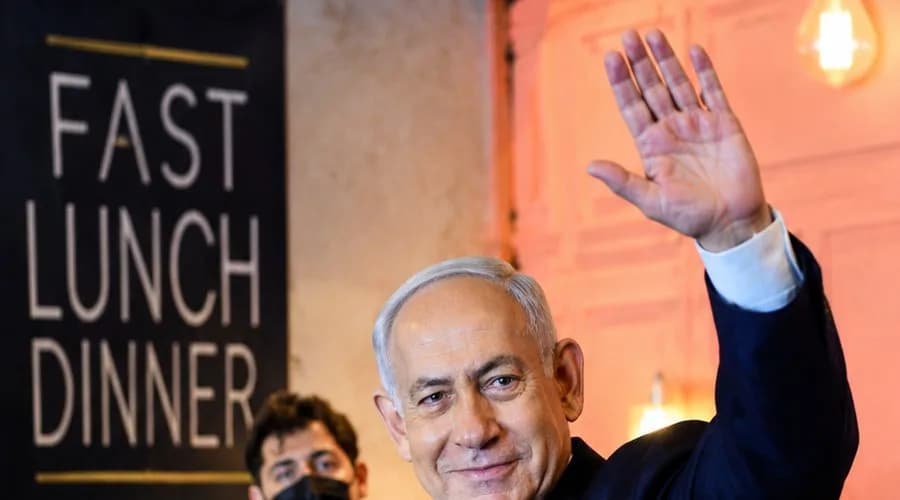
On October 18, President Donald Trump publicly endorsed the Israeli prime minister for reelection. On October 26, he renewed that endorsement, connecting Netanyahu's leadership directly to the unfinished confrontation with Iran.
Trump's message was extraordinary:
"Vote for Bibi Netanyahu for Prime Minister; we have to finish the job that we started!"
It was more than a diplomatic compliment. An American president was publicly identifying the Israeli leader he wanted beside him during one of the most consequential periods in Middle Eastern history.
For Netanyahu, who has survived repeated political crises and decades of challenges to his leadership, the endorsement arrives at a critical moment.
But will it be enough to overcome an electorate still deeply divided over his record?
The Partnership That Changed the Middle East
Netanyahu's campaign is built around an argument few of his opponents can simply dismiss: experience in a region where national-security decisions carry extraordinary consequences.
Since Hamas's October 7, 2023, attack, Israel has engaged in prolonged military operations against Hamas, Hezbollah, and Iranian forces.
In February 2026, Israel and the United States launched a joint military campaign against Iran, targeting nuclear and military capabilities that both governments described as major security threats.
The conflict has been costly, disruptive, and far from fully resolved. But it has also placed the strategic partnership between Washington and Jerusalem at the center of regional security.
Trump has publicly praised Netanyahu's wartime leadership, calling him a "Great Warrior Prime Minister."
On October 19, Netanyahu thanked Trump personally and spoke of unfinished work against Iran and efforts to expand the Abraham Accords.
That second objective matters.
The Abraham Accords, established during Trump's first presidency, normalized diplomatic relations between Israel and several Arab countries, demonstrating that regional cooperation was possible despite decades of hostility.
Military strength, diplomatic recognition, and regional economic cooperation represent three different dimensions of the U.S.–Israel relationship.
Netanyahu has made all three central to his case for remaining prime minister.
A Political Survivor Facing His Biggest Test
There is another remarkable fact about this election.
Netanyahu's government is completing its full statutory term, an unusual achievement in Israel's frequently unstable parliamentary system. The October 27 election is the first scheduled general election held on time since 1988.
For a leader whose political career has repeatedly been declared finished, simply reaching this milestone is significant.
Yet the electoral numbers are more complicated than his campaign's message of momentum.
The October 23 Channel 12 survey projected 23 seats for Gadi Eisenkot's centrist Yashar party and 21 for Netanyahu's Likud.
Channel 13 placed Yashar at 22 and Likud at 19.
Both projected approximately 50 seats for Netanyahu's existing coalition parties—short of the 61 required to command a parliamentary majority.
An alternative Channel 14 survey produced much stronger figures for the prime minister's political bloc.
Netanyahu remains a major contender, but most current polling does not establish him as the favorite to secure a governing majority.
The opposition faces a complication of its own.
Eisenkot, former Prime Minister Naftali Bennett, Avigdor Liberman, and other opposition leaders represent different political movements with competing leadership ambitions.
Winning more parliamentary seats than Netanyahu's bloc would not automatically give them an agreement to govern together.
In Israel, the election determines the composition of parliament. Coalition negotiations determine who ultimately leads the government.
Why Israel Is Still Divided
The country's political debate cannot be understood without returning to October 7.
The Hamas-led attack killed approximately 1,200 people and exposed severe failures in Israel's security system.
Many Israelis continue to hold Netanyahu accountable for those failures and for his government's handling of the subsequent wars and hostage crisis.
The proposed exemptions from military service for ultra-Orthodox men have also generated public anger, particularly among families whose relatives have endured repeated military deployments.
Eisenkot's campaign draws strength from his military credentials and his criticism of Netanyahu's leadership.
For Netanyahu's supporters, however, his decades of international experience, willingness to confront Iran, and close relationship with Washington remain substantial arguments in his favor.
That is what makes the election so consequential.
Israelis are not merely debating what happened during the past three years.
They are deciding what kind of leadership they believe can secure the country's next chapter.
America Will Be Watching
Trump's intervention has added an international dimension to the final days of the campaign.
The U.S. president has made his preference unmistakable, emphasizing their shared military operations and strategic objectives.
But the American government's relationship with Israel extends beyond any single prime minister. Washington maintains institutional security and diplomatic ties that can continue under different Israeli governments.
Ultimately, the decision belongs to Israeli voters.
The next government will inherit enormous responsibilities: containing Iran's military capabilities, addressing Gaza's future, protecting civilians, rebuilding public trust, strengthening the economy, and determining the next phase of regional diplomacy.
Few Israeli elections have taken place under such demanding circumstances.
And few political leaders have entered such an election with a personal endorsement from the president of the United States.
Tomorrow, Israel will decide whether Netanyahu's experience and American partnership earn him another chapter in power—or whether the country chooses a different leader to confront those challenges.
After decades of political battles, Netanyahu is again standing at the center of Israel's national debate.
The election remains unsettled.
But one thing is certain: Israel's next chapter will be written under the shadow of extraordinary history—and with the eyes of the world watching.