


 3 min read
 63
 Linkedin
 Threads
 Facebook
 X

Imagine running for governor, spending millions of dollars promoting your leadership, and then waking up to discover that your own mother has appeared in a political advertisement urging people not to vote for you.
That is exactly what happened to Ohio Democratic gubernatorial candidate Amy Acton.
With just two weeks remaining before the November 3 election, a video featuring her estranged mother, Donna Arthur, began spreading across social media.
And the message was devastatingly personal.
"She is a liar. She lies about her past," Arthur declares in the advertisement.
She disputes Acton's account of having lived in a tent during her childhood and questions whether her daughter should become Ohio's next governor.
The video ends with a direct appeal against Acton's candidacy.
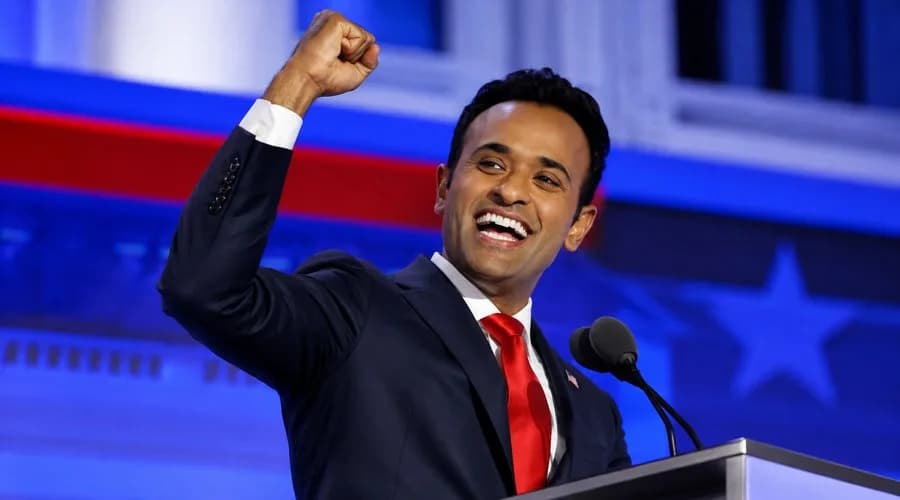
Within hours, the advertisement had ignited an enormous political controversy, placing Republican nominee Vivek Ramaswamy at the center of the argument.
BOMBSHELL: Ohio Democratic gubernatorial candidate Amy Acton’s own mother urges voters not to vote for her daughter. “My name is Donna Arthur and I’m Amy Acton’s mother. I worked at Children and Family Service Association, building one of the first two sexual abuse programs in America. I love my daughter, but when I saw her lying about her opponent—and it’s not easy for a mother to say this—but Amy has a serious problem. She is a liar. She lies about her past. She says she grew up living in a tent. None of that is true. She’s lied her entire life. My daughter needs help, and she can’t help you if she needs help herself. People can change, but first they have to tell the truth, and my daughter still isn’t doing that. Don’t vote for people who lie. Don’t let her become your governor. If you think she’ll make your life better, you’re fooling yourself. It will only get worse.” That’s one hell of an October surprise.
— Walter Curt (@wcdispatch) October 20, 2026
When Your Own Mother Becomes Your Political Opponent
Political advertisements routinely feature former employees, political opponents, and dissatisfied voters criticizing candidates.
But a mother publicly challenging her own daughter's honesty is something considerably more unusual.
Arthur identifies herself in the video and explains that she previously worked with an organization involved in developing programs addressing sexual abuse.
She then challenges statements Acton has made about her upbringing.
The extraordinary nature of the accusation is what gave the video its immediate viral appeal.
What happens when the person questioning a candidate's credibility is not a political opponent, but a member of their own family?
There is an important distinction, though: Arthur's accusations are not independently established facts.
And the family history behind the advertisement is more complicated than its one-minute presentation suggests.
Democrats Respond With Fury
Acton's campaign quickly condemned the video.
Her brother, Philip Stearns, issued a statement describing their mother as estranged and alleging that she had remained married to the man who sexually abused Acton when she was 12 years old.
According to Stearns, the children were removed from their mother's custody after that man was arrested.
He accused Ramaswamy of exploiting his sister's childhood trauma for political purposes.
The statement transformed the controversy from a dispute over a candidate's biography into a deeply sensitive argument involving alleged childhood abuse and family estrangement.
But there is another important fact: as of October 20, the individual or organization responsible for financing and producing the advertisement has not been publicly verified.
The video does not identify a financial sponsor.
Local journalists have reported that they cannot independently establish whether Ramaswamy's campaign was involved.
That makes the accusation against him a political allegation, not a confirmed fact.
And it raises another question: Who commissioned the advertisement, who paid for it, and why was it released at this particular moment?
Why This October Surprise Matters
The controversy comes at a particularly important moment for Ohio.
Ramaswamy, a biotechnology entrepreneur and former Republican presidential candidate, is competing against Acton, Ohio's former health director.
Their campaigns have already exchanged accusations over COVID-19 policies, business practices, education, taxation, and the cost of living.
Acton's leadership during the pandemic remains one of the most contested aspects of her public record.
Ramaswamy has criticized her decisions and argued that Ohio needs a different approach to state government.
Acton has focused her campaign on affordability, healthcare, and public education.
Now, instead of debating those issues, the campaigns are confronting a video involving the Democratic candidate's mother.
The timing is unmistakable.
With Election Day approaching, the advertisement has introduced a new controversy into an already fiercely contested gubernatorial race.
But its electoral impact remains unknown.
An October 20 Marist poll, conducted before the advertisement began circulating widely, showed Acton leading Ramaswamy 50% to 43% among likely voters, with a margin of error of 4.5 percentage points.
Those numbers cannot tell us whether the video will influence voters.
They do establish that the race was competitive and closely watched before this controversy erupted.
The Advertising War Has Entered New Territory
The Ohio governor's race has become one of the nation's most expensive political advertising battles.
According to Axios, Ramaswamy's campaign and allied organizations have spent or reserved more than $97 million in advertising.
Both candidates have criticized negative campaign tactics.
In an interview with Cleveland's 19 News conducted before this latest video emerged, Ramaswamy said factual criticism of a candidate's record was legitimate but argued that political debates should determine the election.
Acton accused his campaign of promoting misleading attacks and said she would not target his family.
Those statements now provide an important standard against which the new controversy can be examined.
Political accountability should be based on evidence, and the same standard should apply to every candidate.
Arthur has made serious allegations against her daughter.
Acton's family has challenged those allegations and provided a deeply troubling explanation for their estrangement.
The advertisement's creators have not been identified.
Those are three separate facts that should not be confused.
An October Surprise Nobody Expected
The reaction to the video has extended well beyond Democratic political circles.
Some conservative commentators have described the advertisement as an extraordinary political development, while critics across the political spectrum have questioned the ethics of using an estranged parent in an election attack.
The video has succeeded in generating attention. Whether that attention benefits or damages either candidate is a different question.
And that may be what makes this episode particularly revealing about modern American campaigns.
A single minute of video has pushed one of America's most important gubernatorial contests into a national discussion about family accusations, political credibility, and the limits of campaign advertising.
For now, Ohio voters have heard from Amy Acton's mother, her brother, and political commentators across the country.
The unresolved questions concern the evidence behind the competing family accounts and the identity of whoever commissioned the advertisement.
The video may be an October surprise, but the real story is still unfolding. And with Election Day approaching, one thing is certain: Ohio's political battle has become intensely personal.