 3 min read
 42
42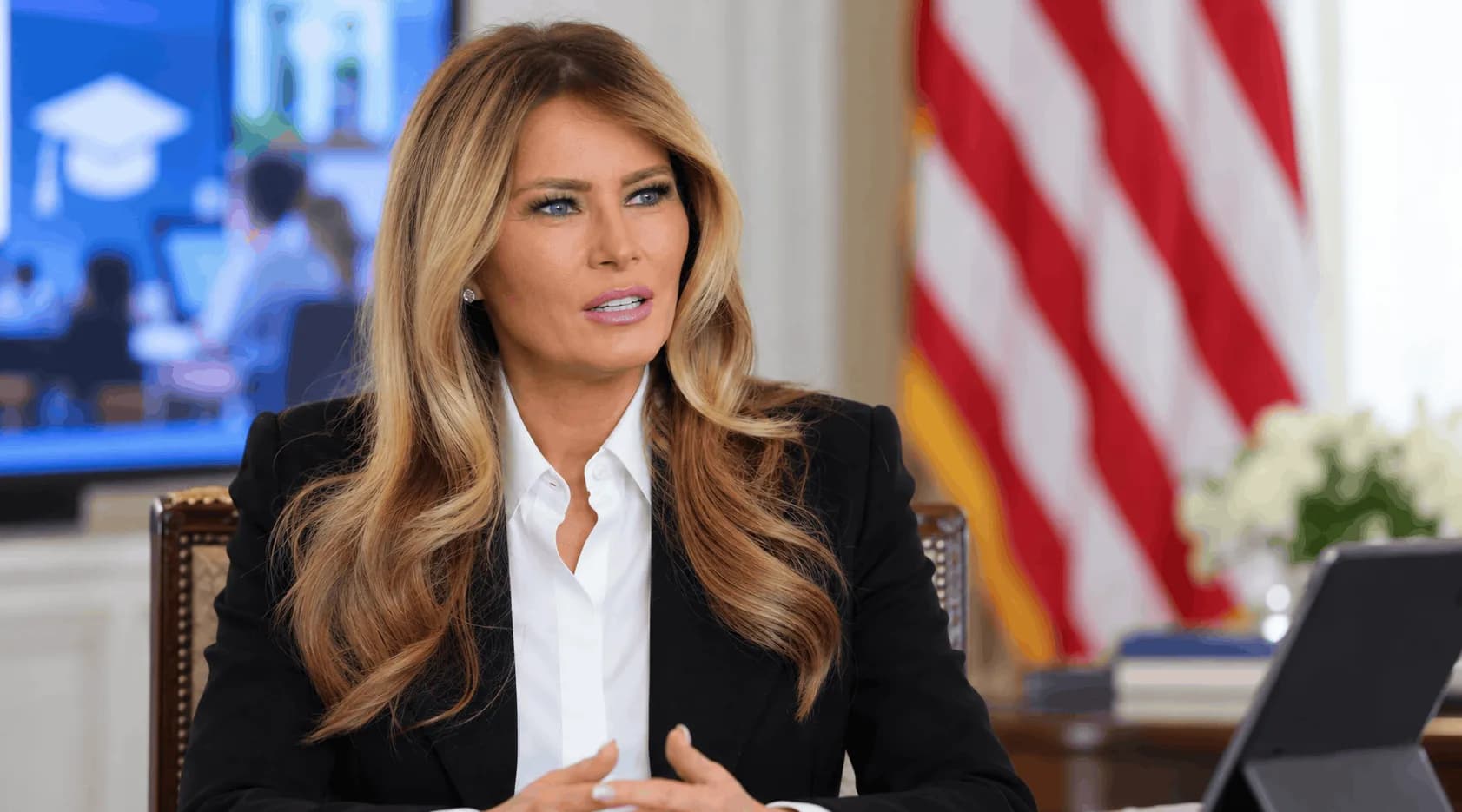
 Linkedin
 Threads
 Facebook
 X
X
America's next generation of inventors, engineers, entrepreneurs, and scientific pioneers may already be sitting in classrooms across the country. First Lady Melania Trump wants to give them an opportunity to discover what they can accomplish.
On October 13, the First Lady launched the 2027 Presidential Super Intelligence Challenge, expanding a national initiative that engaged more than 20,000 students from all 50 states and American schools overseas during its inaugural year.
The program encourages K-12 students to use emerging artificial intelligence technologies to develop practical solutions to problems affecting their schools, families, communities, and the nation.
This year's expansion introduces another significant opportunity: the First Lady Seal of SI Readiness, recognizing schools that establish the educational resources, teacher training, policies, and safeguards needed to prepare students for an increasingly AI-powered economy.
The initiative arrives at a defining moment for American education.
Artificial intelligence is already reshaping manufacturing, healthcare, engineering, agriculture, national security, and small-business operations. The children entering classrooms today will inherit a workforce profoundly different from the one their parents entered.
Melania Trump's initiative addresses that transformation at its foundation: America's schools.
The larger vision is to help students become creators of tomorrow's technology, not simply consumers of it.
A First Lady Investing in America's Next Generation
The Presidential Challenge reflects a growing emphasis in Melania Trump's public initiatives on connecting young people with education, technology, and future opportunities.
When announcing the program, she emphasized the untapped potential already present in American classrooms.
“America's next groundbreaking idea is already sitting in a classroom,” the First Lady said. “We must give our children the knowledge, tools, and opportunities to bring those ideas to life.”
That philosophy gives the initiative a practical purpose.
Instead of treating advanced technology as something reserved for Silicon Valley engineers or major research universities, the competition introduces students to the process of identifying problems and developing solutions.
An elementary school team might investigate how technology could help reduce cafeteria food waste. Middle school students could design a tool to improve accessibility. High school students might explore applications involving agricultural efficiency, public safety, or environmental monitoring.
These are illustrative possibilities, but they show why project-based learning matters.
Students are challenged to research a problem, develop an idea, examine its feasibility, and communicate their findings.
Those are also the habits that support entrepreneurship and scientific innovation.
A successful project does not necessarily have to become a commercial product to provide lasting value. The student who learns to identify a need, test a solution, and improve a design is gaining capabilities useful far beyond the classroom.
From One Student's Idea to an Entire School's Transformation
The First Lady Seal of SI Readiness represents one of the most important expansions of the program.
The original competition emphasized projects developed by students and educators. The new designation invites entire schools to strengthen their readiness for emerging technology.
Participating institutions work toward documented milestones involving teacher capabilities, student learning opportunities, responsible-use policies, educational safeguards, and community partnerships.
The program also encourages schools to establish teams that bring administrators, educators, parents, and students into the planning process.
This approach recognizes an important reality: giving students access to software is not the same as preparing them to use it effectively.
A teacher who understands how AI works can help students evaluate its results, recognize mistakes, and apply it to meaningful assignments.
A school with clear policies can establish expectations for academic integrity and responsible use.
And students benefit when technology education is connected to learning goals rather than introduced merely because a new product has become popular.
The program's eligibility framework includes public, charter, private, and qualifying faith-based schools. Eligible homeschool students and educators can participate through the competition categories designed for them.
That broad structure creates opportunities for different educational communities to contribute their own strengths.
Schools seeking the Seal must register by December 18, 2026, and submit evidence of their readiness milestones by April 30, 2027.
Selected institutions may receive recognition during the national finals in June.
American Innovation Begins Before the First Job
The initiative also connects education to America's economic future.
President Trump's administration has made technological leadership a central priority, emphasizing artificial intelligence, domestic manufacturing, advanced computing, energy production, and scientific research.
Those ambitions require more than factories, data centers, and private investment.
They require people capable of designing, maintaining, improving, and applying new technologies.
Consider the semiconductor industry.
Building advanced chip factories creates demand for engineers, technicians, software specialists, equipment operators, and other skilled workers.
The expansion of AI-powered healthcare creates opportunities for professionals who understand both medicine and computational tools.
Small businesses increasingly need people capable of integrating automation into customer service, accounting, logistics, and everyday operations.
The next generation of workers will benefit from understanding not only how to operate sophisticated systems, but how to evaluate their output and apply them responsibly.
A national technology competition cannot solve every workforce challenge. It can, however, introduce young Americans to careers and capabilities they might never otherwise explore.
And that early exposure may be especially meaningful in communities where advanced technology careers can seem distant from everyday life.
A Challenge With Real Opportunities and National Recognition
The Presidential SI Challenge includes a structured competition progressing through state, regional, and national championships.
Students participate in age-appropriate categories, with separate opportunities for more advanced middle and high school projects.
Educators can also enter projects demonstrating innovative approaches to teaching or using AI technologies in classroom operations.
According to the official rules, selected state champions receive individual $200 gift cards. Regional champions qualify for additional recognition and awards, while national champions can receive larger prizes.
The highest listed individual student award is $12,500 for qualifying high school Trailblazer competitors.
Beyond the financial incentives, the competition offers something potentially more valuable: experience presenting ideas, responding to questions, improving projects, and learning from other innovators.
These skills closely resemble the process followed by entrepreneurs developing new products.
An idea becomes a proposal. The proposal becomes a working concept. Feedback helps improve the design.
Students begin to understand that innovation requires persistence, research, teamwork, and the willingness to learn from unsuccessful attempts.
For families, the initiative provides a structured way to encourage curiosity and practical problem-solving.
For teachers, it creates opportunities to bring emerging technologies into education through clearly defined projects rather than disconnected demonstrations.
Parents and Teachers Remain Essential
One of the program's strengths is its emphasis on institutional preparation alongside student experimentation.
Children need guidance as they encounter increasingly sophisticated technology.
AI systems can produce convincing but incorrect answers. Students must understand privacy, appropriate data sharing, academic honesty, and the difference between using technology to support learning and allowing it to replace their own thinking.
The readiness framework addresses these responsibilities through school policies, safeguards, and educator preparation.
Student participation also includes consent requirements for parents or legal guardians.
This structure makes room for families and educators to help determine how technology is introduced and supervised.
It also reinforces a central principle of effective education: technology should expand a child's abilities, not replace the development of those abilities.
A student who uses AI to investigate a scientific problem should still learn to question assumptions, evaluate evidence, and explain the conclusion.
Those human capabilities become more valuable, not less, as technological tools become increasingly powerful.
Preparing America for the Next 250 Years
The timing carries additional significance as the United States celebrates its 250th anniversary.
America's history includes generations of inventors, scientists, engineers, manufacturers, and entrepreneurs who transformed ideas into industries.
The nation's technological achievements have depended on both individual ingenuity and institutions capable of developing talent.
The Presidential SI Challenge draws on that tradition while directing attention toward the emerging AI economy.
Its long-term promise is not limited to the students who win national awards.
A participant may discover an interest in computer science. Another may decide to study engineering. A teacher may develop a better way to introduce technology to students who previously had little exposure.
Some of those young people may eventually establish businesses, develop medical technologies, strengthen American manufacturing, or contribute to national defense.
Those outcomes are possibilities rather than guaranteed results, but they illustrate the purpose of investing in scientific and technological education early.
The initiative also reflects a broader strategic connection: America's future technological strength will depend partly on how successfully today's schools prepare tomorrow's workforce.
How Families and Schools Can Participate
Registration for the 2027 Presidential SI Challenge is open through December 18, 2026, with student and educator projects due December 23, 2026.
Schools pursuing the First Lady Seal of SI Readiness have until April 30, 2027, to submit evidence of completed milestones.
The national championship events are scheduled for June 6–9, 2027, in Washington, D.C.
Families, educators, and school administrators can review the categories, eligibility requirements, consent forms, and registration procedures through the official program website at https://www.ai.gov/initiatives/presidential-challenge.
The Next American Breakthrough Could Begin in a Classroom
Melania Trump's expanded initiative connects an immediate educational opportunity with a longer-term national objective.
The competition gives students a reason to explore technologies that are already changing the economy. The new school-readiness designation encourages educational institutions to develop the capabilities and safeguards necessary to teach those technologies responsibly.
Together, they create a pathway from classroom curiosity to practical experience.
The significance reaches beyond a competition or an award ceremony.
America's future engineers, inventors, healthcare innovators, business founders, and scientific researchers are being educated today.
Giving them opportunities to understand emerging technologies, solve meaningful problems, and develop confidence in their own abilities can help establish the foundation for future discoveries and industries.
The next American technological breakthrough may not begin in a corporate laboratory.
It may begin with a student who recognizes a problem, a teacher who encourages an idea, and a family that believes the child has something valuable to contribute.