 3 min read
 72
72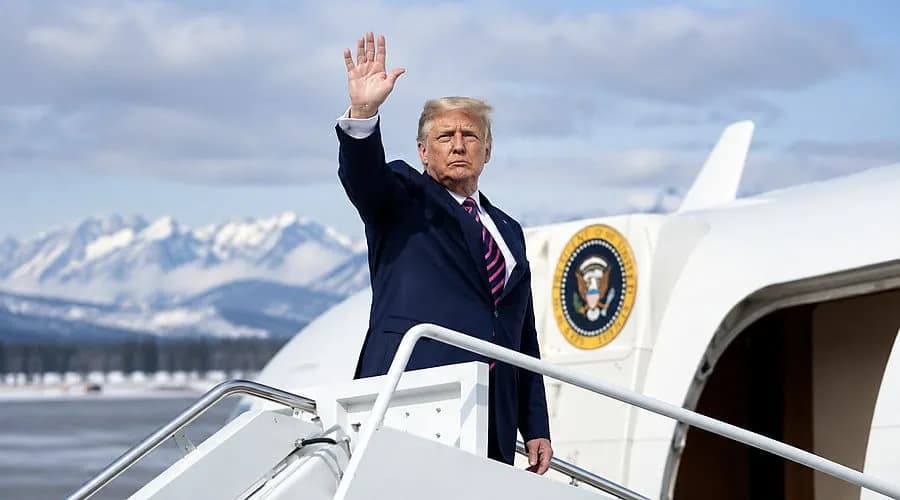
 Linkedin
 Threads
 Facebook
 X
X
President Donald Trump returned to Alaska on October 13 with a message that reaches far beyond the state's oil fields: America's northernmost frontier has an increasingly important role to play in the nation's economic strength, energy security, and military future.
The White House highlighted an ambitious agenda that includes a proposed $54 billion natural gas investment, $150 million for electrical infrastructure, expanded access to critical minerals, substantial military construction funding, and federal tax relief for Alaska workers and seniors.
The administration is also supporting the state's commercial fisheries, rural healthcare facilities, and military families.
Taken individually, these initiatives represent significant opportunities. Together, they reveal a larger strategy.
Alaska has the energy resources America needs, the minerals its industries depend on, and the geographic position essential to protecting the nation's interests in the Arctic.
The Trump administration is seeking to connect those advantages through infrastructure development, international investment, resource policy, and national defense.
The Alaska LNG Project Could Open a New Energy Corridor to Asia
Among the most significant opportunities is the proposed Alaska LNG project, a massive infrastructure development designed to transport natural gas from Alaska's North Slope to an export terminal in the southern part of the state.
For decades, Alaska has possessed substantial natural gas reserves without the infrastructure necessary to bring much of that gas to major commercial markets.
The proposed pipeline would help connect those resources to customers in Alaska and across the Pacific.
In September, President Trump announced a broader South Korean energy investment framework potentially worth $200 billion, identifying approximately $54 billion associated with the Alaska natural gas development.
South Korean participation remains subject to commercial evaluation and financing arrangements, making the pipeline an important proposed investment rather than a completed financing agreement.
The project has also attracted interest from Taiwan.
On October 14, Taiwan's government outlined plans to purchase approximately 6 million metric tons of liquefied natural gas annually from the Alaska project, with potential investment of up to $4.4 billion.
That development adds a strategic dimension to the initiative.
Asian economies depend heavily on imported energy. Expanding American natural gas exports could provide additional supply options while deepening economic relationships with important U.S. partners.
For Alaska, construction and operation could create opportunities in engineering, transportation, fabrication, logistics, and energy services.
For the United States, a successful project could strengthen its role as a dependable energy supplier in the Pacific.
And for American workers, it demonstrates how energy resources can support opportunities throughout an industrial supply chain.
An Electrical Investment With Household Benefits
Large energy projects often dominate national headlines, but smaller infrastructure investments can carry enormous importance for everyday families.
The administration announced $150 million in Defense Production Act funding for a major new electrical transmission line in Alaska.
According to the White House, the project is intended to improve energy infrastructure and lower costs for communities representing approximately 75% of the state's population.
Alaska faces unusual electricity challenges.
Its communities are separated by vast distances, difficult terrain, and weather conditions that can complicate the construction and maintenance of energy infrastructure.
Some rural communities depend on isolated power systems and imported fuel.
Reliable electrical infrastructure can help support households, medical facilities, schools, businesses, and industrial operations.
For a family, improved energy infrastructure can mean more dependable service and the possibility of lower utility expenses.
For entrepreneurs, it can make operating a business more practical.
For manufacturers, dependable electricity is foundational to expansion.
The broader economic principle is straightforward: energy infrastructure supports nearly every other productive activity.
Alaska's Minerals Connect Directly to American Technology
The administration is also expanding opportunities to develop Alaska's mineral resources.
In December 2025, the federal government reopened nearly 82% of the National Petroleum Reserve-Alaska to oil and gas leasing.
Earlier actions also expanded leasing opportunities in the Arctic National Wildlife Refuge's Coastal Plain and advanced development plans across portions of the North Slope.
One particularly important initiative involves the Ambler Road project, intended to provide industrial access to mineral deposits in northwestern Alaska.
The region contains resources associated with copper, cobalt, and other materials important to advanced manufacturing.
Why does this matter to Americans living thousands of miles away?
Because modern technology depends on physical materials.
Copper is essential for electrical systems, industrial equipment, and expanding power infrastructure.
Other critical minerals have applications in batteries, electronics, aerospace, and defense technology.
American companies can design advanced computers, communications systems, and military equipment, but manufacturing those technologies also requires reliable access to essential materials.
Expanding domestic mineral production could help diversify supply chains and reduce exposure to certain overseas suppliers.
The Ambler project remains subject to legal, environmental, and development requirements, including concerns about wildlife habitat and subsistence resources.
Its strategic purpose is nevertheless clear: connect potential mineral production with the transportation infrastructure needed to support commercial development.
America's technological future depends not only on innovation in laboratories, but also on access to the materials that make innovation possible.
Billions for Military Infrastructure Strengthen America's Arctic Position
Alaska's economic importance is matched by its strategic geography.
The state places American military forces near major northern defense routes and areas of significant Russian military activity.
Its installations support air defense, training, surveillance, and the operational capabilities needed to protect the United States and its allies.
The administration is directing new resources toward Fort Wainwright, Joint Base Elmendorf-Richardson, and Eielson Air Force Base.
The White House highlighted enacted funding that includes $208 million for barracks at Fort Wainwright, $46 million for a base supply complex at Joint Base Elmendorf-Richardson, and $152 million for an integrated test and training facility.
Additional appropriations support runway improvements, maintenance facilities, housing, and other essential military infrastructure.
The administration is also pursuing a proposed multiyear modernization effort known as Fighter Town USA.
The project envisions approximately $7 billion in long-term improvements at Joint Base Elmendorf-Richardson, including 26 modern facilities and the potential for thousands of private-sector jobs.
The broader plan is included in defense legislation under congressional consideration.
These investments connect national security with local economic activity.
Military construction requires contractors, skilled trades, engineering firms, transportation services, and materials suppliers.
Modern facilities also improve conditions for service members and their families.
And the need for a capable American presence in Alaska is growing as Russia maintains significant Arctic military infrastructure and China pursues greater involvement in northern shipping, research, and economic activities.
For the United States, Alaska is not a remote outpost.
It is one of the nation's most important strategic gateways.
Tax Relief and Healthcare Bring the Agenda Closer to Home
The administration's Alaska initiatives also address immediate household concerns.
Under the Working Families Tax Cuts, eligible workers can deduct qualified tip income from federal taxable income, subject to applicable limits.
The White House estimates that approximately 14,000 Alaska workers could benefit.
That provision matters to employees in hospitality, restaurants, tourism, and other service industries.
For eligible older residents, the law provides an additional federal income tax deduction of up to $6,000, with higher combined deductions available to qualifying married couples.
The White House estimates approximately 100,000 Alaska seniors could benefit.
These deductions can reduce federal income tax liabilities for qualifying households, helping residents retain more of their income.
The administration also announced approximately $272 million in first-year funding for Alaska through the Rural Health Transformation Program.
For families in remote communities, rural healthcare access is an especially important issue.
Traveling to medical appointments can involve long distances, difficult weather, and expensive transportation.
Investment in healthcare infrastructure and services can help support communities where access to care presents challenges rarely encountered in major metropolitan areas.
Support for veterans is another part of the administration's agenda.
The Department of Veterans Affairs awarded more than $4 million in grants to organizations assisting Alaska veterans facing homelessness or housing instability.
A new walk-in clinic also opened in Anchorage in September.
These initiatives demonstrate how national policy can translate into practical services for residents who live far from Washington.
Alaska's Fisheries Are Economic Assets Worth Protecting
Energy and mineral development may attract attention, but commercial fishing remains one of Alaska's most important established industries.
The administration highlighted actions supporting the timely opening of groundfish and halibut fisheries.
According to the White House, the affected fisheries have an estimated economic value of approximately $301 million in the Gulf of Alaska and $2.64 billion in the Bering Sea and Aleutian Islands.
Those figures describe the value of the fisheries supported by the regulatory actions, rather than new federal spending.
Fishing supports a broad network of families and businesses.
Commercial crews depend on predictable seasons. Processing facilities require workers and equipment. Transportation companies move seafood to domestic and international customers.
Restaurants and retailers depend on reliable supply chains.
Alaska's seafood industry is also closely tied to the identity and traditions of coastal communities.
Supporting timely operations and responsible resource management helps protect an important source of employment and commercial activity.
The Bigger Strategy: Energy, Industry, Security, and Opportunity
What connects a natural gas pipeline, a mineral access road, a military airfield, and a rural healthcare investment?
Each addresses a different part of what makes a state economically productive and strategically important.
Energy supports industry. Transportation infrastructure connects resources to markets. Mineral supplies support manufacturing. Military installations protect national interests. Healthcare and essential services help communities sustain their populations and workforces.
The Trump administration's Alaska agenda places these priorities within a broader national strategy emphasizing American resource development, private investment, technological capability, and defense readiness.
There is also an international dimension.
Natural gas exports can deepen relationships with Asian economies. Mineral development can support critical supply chains. Modernized military facilities strengthen the nation's presence in a strategically important region.
The benefits could extend beyond Alaska through opportunities for American engineering firms, equipment manufacturers, energy companies, and specialized contractors.
For younger Alaskans, expanding industries can create additional career pathways.
For entrepreneurs, new development can bring customers and demand for services.
For military families and rural residents, investment in infrastructure can improve the communities where they live.
Alaska's Next Chapter Could Shape America's Future
President Trump's visit highlighted a state whose importance is becoming increasingly difficult to overlook.
Alaska possesses abundant natural resources, established industries, strategic transportation opportunities, and military installations central to America's northern defense.
The administration has advanced new leasing policies, identified major international energy opportunities, directed funding toward electrical and military infrastructure, and implemented tax and healthcare initiatives affecting Alaska households.
The next decade could see closer connections between Alaska's energy resources and Asian markets, new opportunities for American mineral production, and expanded military capabilities across the Arctic.
Those developments would influence far more than one state's economy.
They would help shape America's access to strategic resources, its relationships with international partners, and its capacity to operate effectively in a region of growing geopolitical importance.
For Alaskans, the potential benefits are equally tangible: skilled employment, stronger infrastructure, dependable services, and new opportunities for businesses and families.
Alaska has always been rich in resources and strategic possibilities. The opportunity now is to connect that wealth with American industry, innovation, and national strength—building an economic future that reaches from the Last Frontier to communities across the United States.